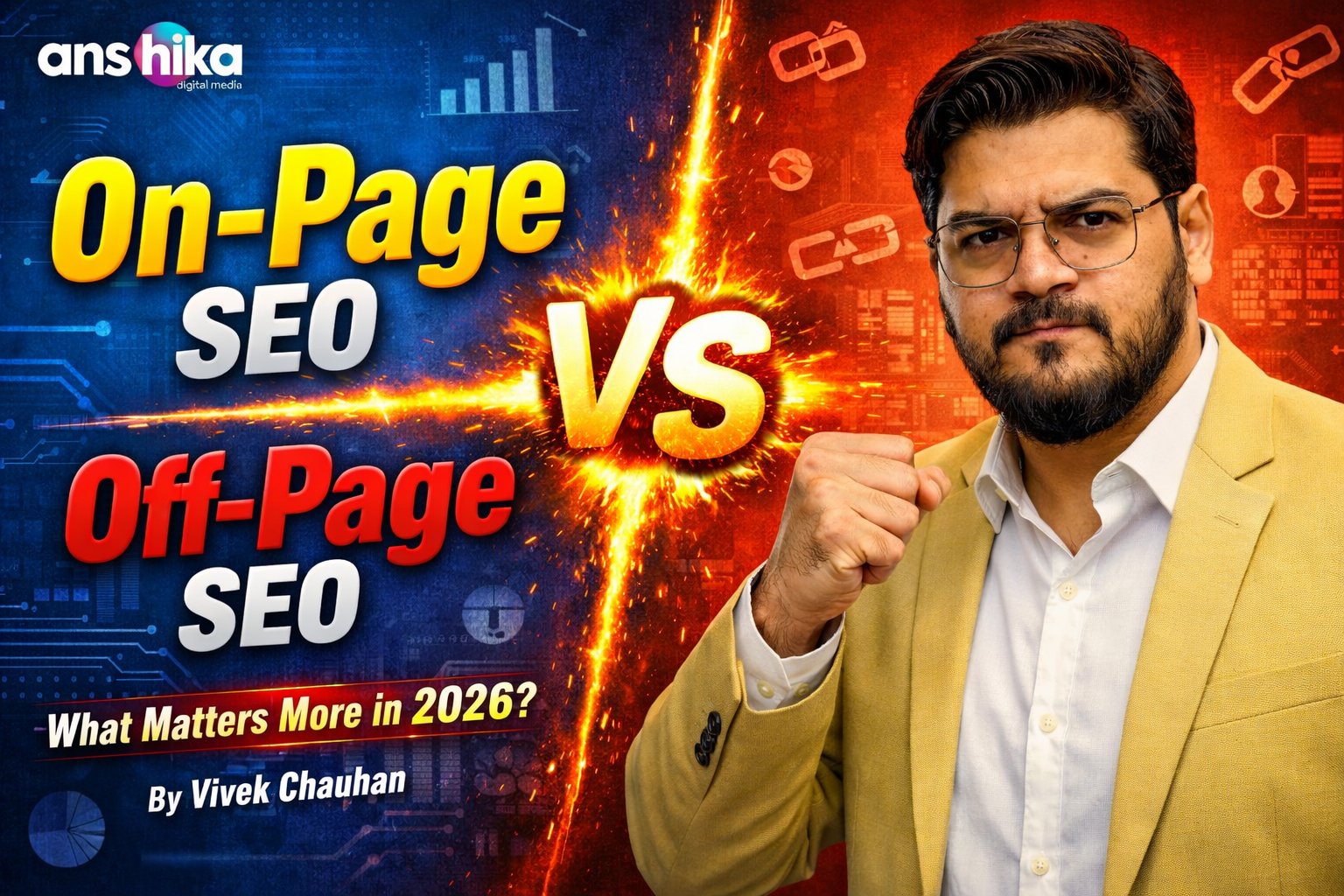
Search Engine Optimization (SEO) continues to evolve rapidly, and by 2026, the competition to rank on Google and other search engines is tougher than ever. Businesses, bloggers, and digital marketers are constantly looking for ways to improve their website visibility and drive organic traffic.
Two major pillars of SEO are On-Page SEO and Off-Page SEO. Both play a crucial role in determining how well your website performs in search engine rankings. But the big question is: Which matters more in 2026?
In this detailed guide, we will explore the differences, importance, strategies, and future trends of On-Page and Off-Page SEO so you can build a powerful SEO strategy for long-term success.
What is On-Page SEO?
On-Page SEO refers to the optimization techniques that are applied directly on a website to improve its search engine ranking. It includes optimizing content, HTML source code, structure, and user experience.
On-Page SEO helps search engines understand your website content and determine whether it is relevant to users’ search queries.
Key Elements of On-Page SEO
1. Keyword Research and Optimization
Keywords remain the foundation of SEO. In 2026, search engines are smarter and focus more on search intent rather than keyword stuffing. Proper keyword placement in title, headings, URL, and content is essential.
2. High-Quality Content
Content is still king. Search engines prefer content that provides value, answers questions, and solves problems. Long-form content, expert insights, and structured information perform better.
3. Title Tags Optimization
Title tags are one of the most important ranking factors. Titles should be engaging, contain primary keywords, and stay within character limits.
4. Meta Description Optimization
Meta descriptions improve click-through rates. A compelling meta description increases the chances of users clicking your result.
5. Header Tags (H1, H2, H3)
Proper use of headings improves readability and helps search engines understand content hierarchy.
6. URL Structure
Clean and descriptive URLs improve both user experience and search engine understanding.
7. Internal Linking
Internal links help distribute authority across pages and improve crawlability.
8. Image Optimization
Optimizing images with alt text, compressed size, and proper naming helps improve rankings and loading speed.
9. Mobile Friendliness
Mobile-first indexing means websites must be fully responsive and optimized for smartphones.
10. Page Speed Optimization
Fast loading websites improve user experience and ranking performance.
11. User Experience (UX)
Google prioritizes websites that provide smooth navigation, readable content, and engaging layouts.
12. Schema Markup
Structured data helps search engines understand your content better and increases chances of rich snippets.
Benefits of On-Page SEO
• Full control over optimization
• Improves website relevance
• Increases organic traffic
• Enhances user experience
• Improves click-through rate
• Builds website authority
• Supports long-term SEO growth
What is Off-Page SEO?
Off-Page SEO refers to optimization techniques performed outside the website to improve its authority, trust, and popularity.
It mainly focuses on building backlinks, brand signals, and reputation across the internet.
Search engines consider off-page signals as proof that your website is valuable and trustworthy.
Key Elements of Off-Page SEO
1. Backlink Building
Backlinks remain one of the strongest ranking factors. Quality backlinks from authoritative websites improve credibility.
2. Social Media Marketing
Sharing content on social media platforms increases brand awareness and traffic.
3. Guest Posting
Writing articles on other websites helps build backlinks and authority.
4. Influencer Outreach
Collaborating with influencers improves trust and visibility.
5. Brand Mentions
Search engines consider brand mentions as a ranking signal.
6. Online Reputation Management
Positive reviews and ratings increase trustworthiness.
7. Forum Posting
Participating in forums builds authority and generates referral traffic.
8. Directory Submissions
Listing websites in relevant directories helps improve backlinks.
9. Content Marketing
Sharing valuable content on multiple platforms increases visibility.
10. PR and Outreach
Digital PR improves brand authority and generates natural backlinks.
Benefits of Off-Page SEO
• Improves domain authority
• Builds brand trust
• Increases website credibility
• Improves keyword ranking
• Generates referral traffic
• Strengthens online presence
On-Page vs Off-Page SEO: Key Differences
On-Page SEO focuses on optimizing elements inside the website, while Off-Page SEO focuses on activities outside the website.
On-Page SEO improves website structure and content quality. Off-Page SEO improves website authority and trust.
On-Page SEO is fully controllable, while Off-Page SEO depends on external factors.
Both strategies are important and should be used together.
Which is More Important in 2026?
In 2026, search engines use advanced AI algorithms to evaluate websites. Google focuses heavily on user intent, content quality, and trust signals.
On-Page SEO is the foundation of ranking. Without proper content and structure, backlinks cannot help much.
Off-Page SEO helps strengthen website authority and competitive advantage.
Experts believe that On-Page SEO contributes around 60% of ranking success, while Off-Page SEO contributes around 40%.
However, the best strategy is to balance both techniques.
Latest SEO Trends in 2026
1. AI Content Optimization
AI tools help create optimized content but human expertise is still important.
2. Voice Search Optimization
More users search using voice assistants.
3. User Intent Optimization
Search engines prioritize content that satisfies user needs.
4. E-E-A-T Principles
Experience, Expertise, Authoritativeness, and Trustworthiness are major ranking factors.
5. Video SEO
Video content improves engagement and ranking.
6. Core Web Vitals
Website speed and user experience impact rankings.
7. Semantic SEO
Topic-based content performs better than keyword-based content.
8. Zero Click Searches
Featured snippets capture more traffic.
Best Strategy to Combine On-Page and Off-Page SEO
Step 1: Perform keyword research
Step 2: Create high-quality content
Step 3: Optimize technical SEO
Step 4: Build high-quality backlinks
Step 5: Improve website speed
Step 6: Promote content on social media
Step 7: Track performance using analytics
Step 8: Update content regularly
Common SEO Mistakes to Avoid
• Keyword stuffing
• Buying low-quality backlinks
• Ignoring mobile optimization
• Slow website speed
• Duplicate content
• Poor user experience
• Not updating old content
Conclusion
Both On-Page SEO and Off-Page SEO are important in 2026. On-Page SEO builds the foundation of a website, while Off-Page SEO increases authority and trust.
A balanced SEO strategy focusing on content quality, technical optimization, and backlinks will deliver the best results.
Businesses and marketers should focus on providing value to users while maintaining strong SEO practices.
If implemented correctly, SEO can provide long-term growth, organic traffic, and higher conversions.
Start optimizing today and stay ahead in the competitive digital marketing world.
About the Author
Vivek Chauhan, Senior Digital Marketing Executive at Anshika Digital Media is an expert at Anshika Digital Media sharing valuable insights on design, marketing, and digital education.